
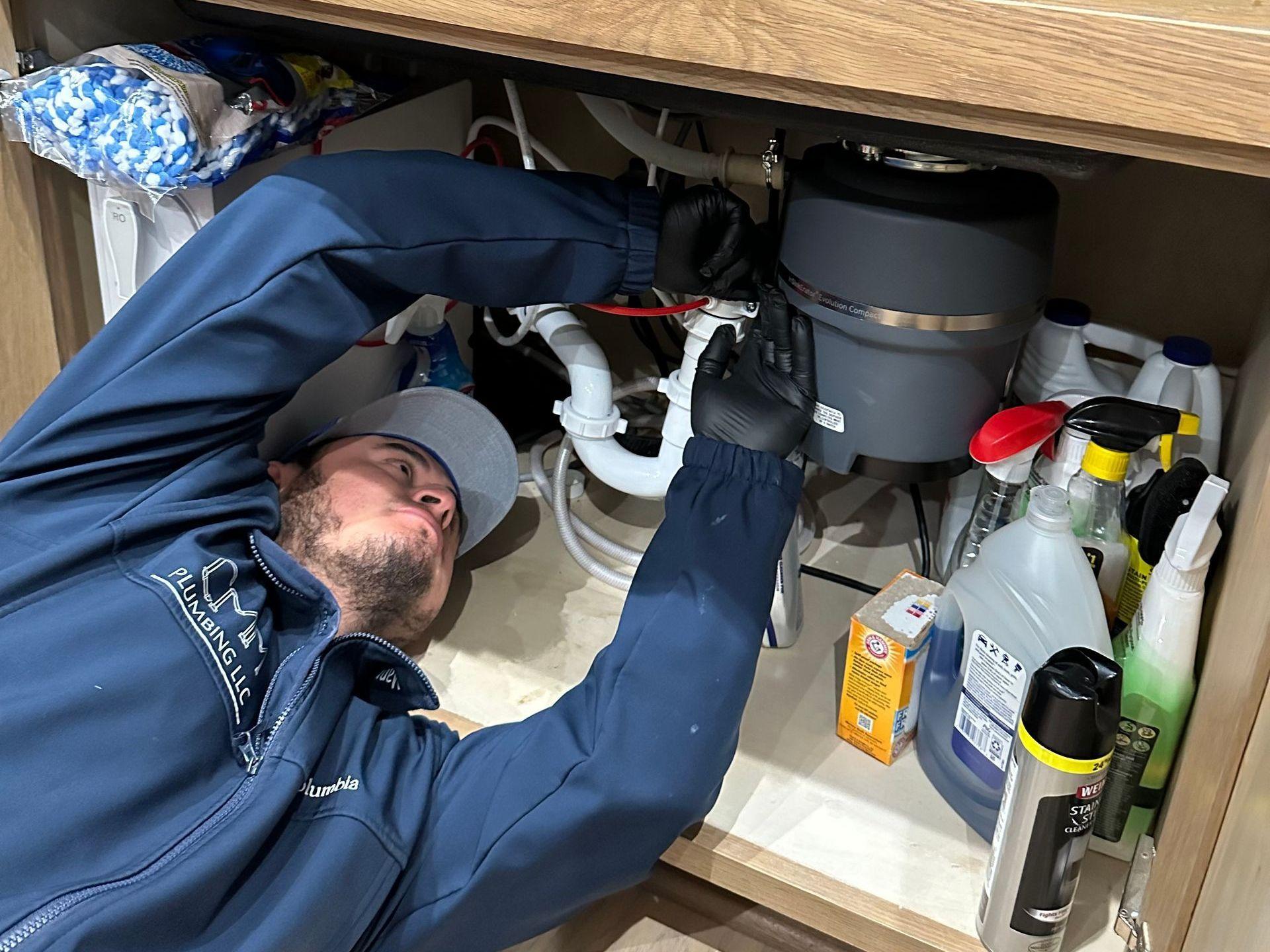
A whole house water filtration system treats every gallon that enters your home, not just the water at one faucet. This guide explains what these systems remove, how they differ from a water softener, the main types, and how to tell whether your Central Texas home actually needs one.
Quick answer: You need a whole house water filtration system when the same water problem shows up at every tap, such as sediment, a chlorine taste or smell, odors or staining. CM&M Plumbing in Coupland, TX tests your water first and then recommends filtration, softening or both, so you only pay for the treatment your water needs.
What Does a Whole House Water Filtration System Do?
A whole house system treats water at the point where it enters your home, so every faucet, shower and appliance gets filtered water. That is the main difference from a pitcher or under-sink filter, which only treats water at one spot.
Depending on the type, a whole house filter can reduce:
- Sand, silt, rust and other sediment
- Chlorine taste and odor from city water treatment
- Unpleasant smells and some causes of staining
- Bacteria, when the system includes a UV stage
It protects more than your drinking glass. Filtered water is easier on faucet cartridges, toilet fill valves, showerheads and the appliances that use water every day.
Is a Water Filter the Same as a Water Softener?
No. They solve different problems, and many homes need both.
A water softener removes the calcium and magnesium that cause hard water scale on fixtures, inside pipes and inside your water heater. A standard filtration system does not soften water. It targets sediment, chlorine taste and odor and other quality issues. If you are already seeing white crust on faucets, read our guide on hard water problems and your plumbing, because a filter alone will not fix scale.
What Are the Main Types of Whole House Systems?
Each type is built for a specific problem. Here is how they compare.
| System type | What it addresses | Usually a good fit for |
|---|---|---|
| Sediment filter | Sand, silt, rust and other particles | Well water, older lines, homes with gritty water or clogged aerators |
| Carbon filtration | Chlorine taste and odor, some smells | City water customers who dislike the taste or smell at every tap |
| Backwashing system | Minerals and particles held in the filter media, flushed out on a set cycle | Homes that prefer media that cleans itself over disposable cartridges |
| UV treatment | Bacteria, without adding chemicals to the water | Private wells and homes with a bacteria concern |
| Combination softener and filter | Hardness plus sediment, taste and odor | Hard water areas where the water has more than one problem |
The right setup depends on your water, which is why we test before recommending equipment.
What Are the Signs Your Home Needs One?
Whole house filtration makes sense when the problem is not limited to one faucet. Watch for:
- Grit or sand in aerators, showerheads or the bottom of a glass
- A chlorine or chemical smell when you run a bath or shower
- Rotten egg or musty odors from hot and cold taps
- Orange, brown or reddish staining in sinks, tubs and toilets
- Cloudy water that does not clear after sitting in a glass
- A private well that has never had its water tested
If your main complaint is hard water scale, spotty dishes or soap that will not lather, start with our article on the signs your home needs a water softener.
How Does CM&M Plumbing Choose the Right System?
We start with the water, not a product. A typical water treatment job follows four steps:
- Test the water at your property to see how hard it is and which minerals and issues are present.
- Check whether your home already has a water softener loop. If it does not, we build one as part of the job.
- Recommend the system that matches your water and how your household uses it.
- Install and commission the system, then show you how to look after it.
A complete system supplied and installed by CM&M Plumbing generally runs between $3,000 and $10,000, depending on how many treatment stages your water needs. Every job is backed by our 2-year warranty on labor. You can see the full range of options on our water treatment and filtration services page.
Water Filtration in Elgin, Leander and Across Central Texas
Water quality changes from one neighborhood to the next. Homes on city water may only need help with taste and odor, while homes on private wells often need sediment filtration and disinfection. Hard water is common in many parts of Central Texas, so filtration and softening are often paired.
We install and service water treatment systems for homeowners in Elgin, TX, Leander, TX, Coupland and the surrounding area.
The Bottom Line
A whole house water filtration system is worth it when the same problem shows up at every tap, and a water test is the only reliable way to know which system fits. Filtration handles sediment, taste and odor, while a softener handles hardness. If you are not sure what your water needs, call CM&M Plumbing at (737) 233-1822 and our licensed team will test your water and walk you through the options.
Frequently Asked Questions
- Do I need a whole house water filter?
- You need one if your water has a problem you can see, taste or smell at every tap, such as sediment, a strong chlorine taste, odors or staining. If the only issue is drinking water taste, a point-of-use filter at the kitchen sink may be enough, so testing the water first is the best way to decide.
- Is a whole house water filter the same as a water softener?
- No. A softener removes the calcium and magnesium that cause hard water scale, while a filter targets things like sediment, chlorine taste and odor. Many Central Texas homes with hard water end up with a combination system that does both.
- Will a whole house filter lower my water pressure?
- A correctly sized system should not cause a noticeable drop in pressure. Pressure problems usually come from a system that is too small for the home or from cartridges that are overdue for replacement, which is why sizing and maintenance matter.
- Do homes on well water need a different system?
- Often, yes. Well water is not treated by a utility, so it may need sediment filtration plus a disinfection step such as UV. A water test shows which treatment your well actually needs before anything is installed.
- How much does a whole house water filtration system cost?
- A complete water treatment system supplied and installed by CM&M Plumbing generally runs between $3,000 and $10,000. The price depends on what your water needs, from a single filtration stage to a combination of softening, filtration and UV or chlorine treatment.
- How often does a whole house filter need maintenance?
- Every system needs some routine care, such as replacing filter cartridges or letting a backwashing system run its cycle. The schedule depends on the type of system and how much sediment and chlorine your water carries, and we explain it when we install the system.
CM&M Plumbing
Licensed plumber serving Coupland, Austin, and Central Texas. Have a question? We're happy to help.