
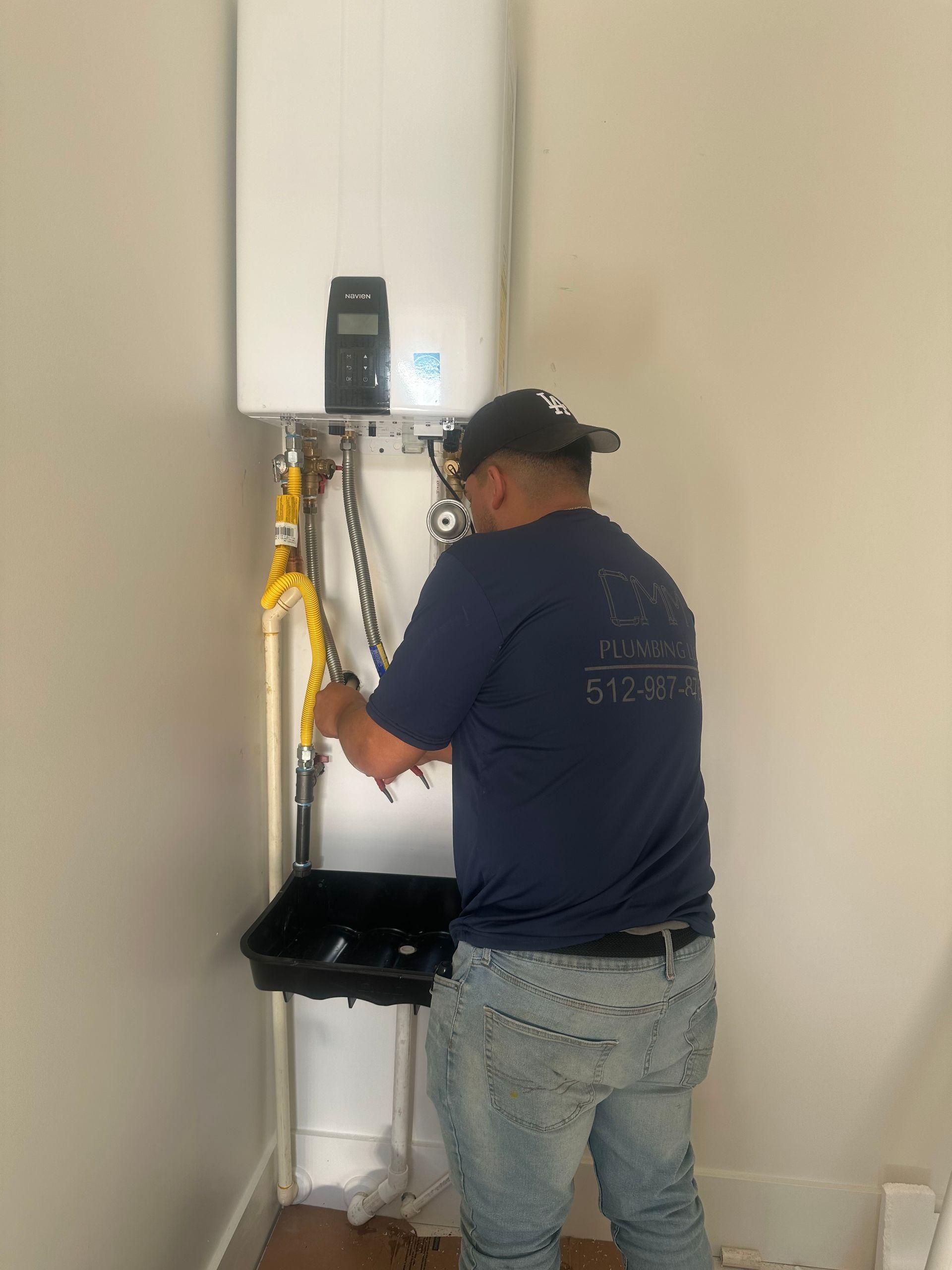
A water heater expansion tank is a small tank that sits on the cold water line above or beside your water heater. This guide explains what it does, which homes need one, how to tell when an existing tank has failed, and what to expect when a plumber installs or replaces one.
Quick answer: If your home has a tank water heater and a check valve, backflow preventer or pressure-reducing valve on the main line, you most likely need an expansion tank. CM&M Plumbing in Coupland, TX can test your water pressure and check your water heater setup to tell you whether your home needs a new expansion tank or just a recharge.
What Does a Water Heater Expansion Tank Do?
An expansion tank gives heated water somewhere to go. Water expands as it warms, and in a typical 50-gallon tank heated from cold supply temperature to around 120°F, that adds up to roughly half a gallon of extra volume every heating cycle.
Inside the tank, a rubber bladder separates water from a cushion of pressurized air. When heated water expands, the extra volume pushes into the tank and compresses the air. When you open a hot water tap, the air pushes that water back into the system. The result is steady pressure instead of a spike every time the burner or element turns on.
Why Do Some Homes Need One and Others Do Not?
The deciding factor is whether your plumbing is an open or closed system.
In an open system, expanding water can flow back out through the water meter toward the city main, so pressure never builds very far. In a closed system, a device on the main line stops that backflow. Common culprits include:
- A pressure-reducing valve (PRV), often installed when city pressure runs high
- A check valve or backflow preventer at the meter or main shutoff
- Some newer water meters that include a built-in check valve
Plumbing codes used in Texas cities, including the Uniform Plumbing Code and the International Plumbing Code, require a way to control thermal expansion when a closed system is created. In practice, that usually means an expansion tank sized for the water heater.
What Are the Signs Your Home Has a Thermal Expansion Problem?
Thermal expansion problems usually show up as small pressure symptoms long before anything fails.
| What you notice | What it can mean | What to do |
|---|---|---|
| Relief valve dripping or discharging | Pressure in the tank is rising past the valve's setting as water heats | Have the pressure and expansion control checked; do not cap the valve |
| Toilets that run or refill on their own | Fill valves are being pushed by pressure swings | Test house pressure at a hose bib with a gauge |
| Banging pipes (water hammer) | High or unstable pressure in the lines | Check the PRV and add or replace the expansion tank |
| Faucets that spurt when first opened | Built-up pressure releasing at the fixture | Measure pressure with the water heater recently fired |
| Expansion tank sounds solid when tapped | The bladder has failed and the tank is waterlogged | Replace the expansion tank |
A dripping temperature and pressure relief valve deserves special attention. That valve is a safety device, and it is doing its job when it opens. The fix is to control the pressure, never to plug or cap the valve.
How Do You Check an Existing Expansion Tank?
You can do two quick checks yourself.
- Tap the tank from bottom to top. The lower half, which holds water, sounds dull. The upper half should sound hollow. If it sounds solid all the way up, the bladder has likely failed.
- Briefly press the air valve on top, like a tire valve. A short hiss of air is normal. Water coming out means the bladder has ruptured.
A plumber will also check the air pre-charge, which should match your home's static water pressure, and confirm that the tank is sized correctly for your water heater. If house pressure is above 80 psi, the PRV usually needs attention too, since plumbing codes generally call for a pressure-reducing valve at that point.
What Happens When a Plumber Installs an Expansion Tank?
Installation is often done during a water heater replacement. The plumber will:
- Test your incoming water pressure.
- Choose a tank rated and sized for your water heater and household pressure.
- Set the tank's air pre-charge to match your water pressure before installing it.
- Install it on the cold supply line near the heater and support it with a bracket or strap.
- Check the system after the heater runs a full cycle.
Because code calls for thermal expansion control on closed systems, it belongs in any licensed water heater installation. You can learn more about CM&M Plumbing water heater installation and repair, or, if you are weighing an upgrade, our tankless water heater services.
Expansion Tanks in Cedar Park, Pflugerville and Across Central Texas
Any home with a PRV or a check valve at the meter is a closed system. Homeowners in places like Cedar Park, TX and Pflugerville, TX often find out about expansion tanks only when a relief valve starts dripping or a home inspector flags a missing tank.
If you are already dealing with banging pipes or running toilets, our guide to water pressure problems in Central Texas explains the other causes to rule out. And if your water heater is older and showing other warning signs, read how to know when it is time to replace your water heater before you invest in new parts.
The Bottom Line
If your home has a tank water heater and a PRV, check valve or backflow preventer on the main line, you almost certainly need a working expansion tank. It is a small part that protects your water heater, relief valve, fixtures and pipes from repeated pressure spikes. If you are not sure whether your home has one, or whether yours still works, call CM&M Plumbing at (737) 233-1822 and our licensed team will check your pressure and your water heater setup.
Frequently Asked Questions
- Do I need an expansion tank for my water heater?
- You need one if your home has a closed plumbing system, meaning a check valve, backflow preventer or pressure-reducing valve stops heated water from flowing back toward the city main. Most homes with a tank water heater and one of those devices need an expansion tank or another approved form of thermal expansion control.
- Where is the expansion tank installed?
- It is installed on the cold water supply line near the water heater, usually just above it or on the wall beside it. It has to be properly supported, because a tank full of water is heavy and should not hang from the pipe alone.
- How long does a water heater expansion tank last?
- Many expansion tanks last about five to ten years, depending on water quality and pressure. Hard water and high incoming pressure can shorten that, so it makes sense to have the tank checked during routine water heater service.
- How can I tell if my expansion tank has failed?
- Tap the top half of the tank: a healthy tank sounds hollow on the air side, while a failed one sounds solid all the way up. Water coming out of the air valve on top also means the internal bladder has ruptured and the tank should be replaced.
- Does a tankless water heater need an expansion tank?
- Usually not, because a tankless unit holds very little water at any time, so there is little volume to expand. Some homes with closed systems or specific manufacturer requirements may still need thermal expansion control, so a plumber should confirm it for your setup.
- Can I install an expansion tank myself?
- It is safer to have a licensed plumber do it. The tank has to be sized for your water heater, pre-charged to match your home's water pressure and supported correctly, and the work should meet the plumbing code your city follows.
CM&M Plumbing
Licensed plumber serving Coupland, Austin, and Central Texas. Have a question? We're happy to help.